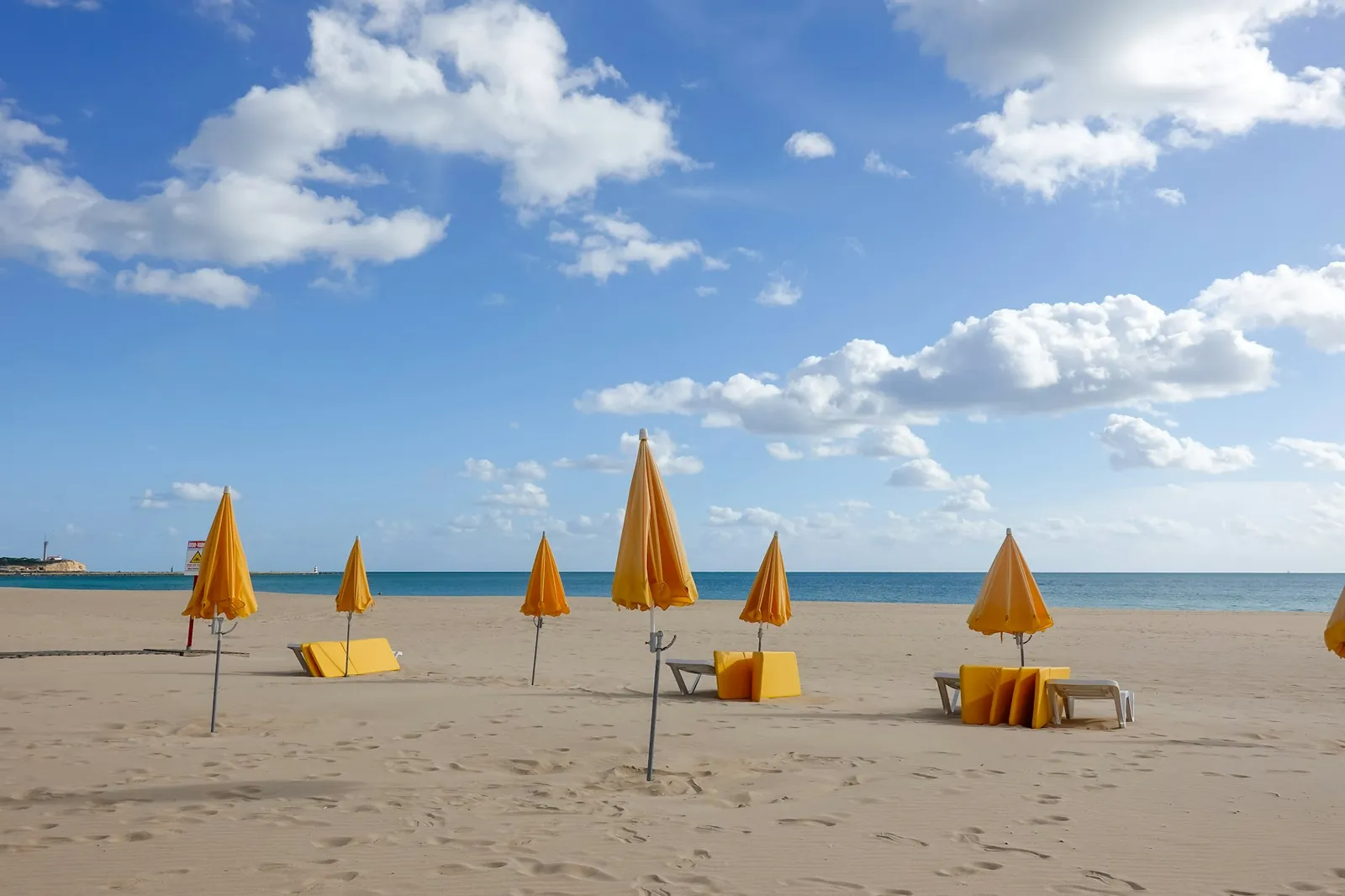
The Canary Islands have the highest UV levels in Spain all year round, so you can burn in January and under cloud. Shade at midday, SPF 30 or more, a hat and water are the basics.
You can burn here in any month. The Canary Islands' health authority says the Canaries have the highest UV radiation of any region in Spain throughout the year, and that protection is needed on cloudy days too, because the rays pass through cloud while a breeze keeps you feeling cool. For a holidaymaker from northern Europe the danger is the first two days: skin that has seen no real sun for months, a calm, bright beach and no feeling of heat until it is too late.
The rule that covers most of it is short. Keep out of direct sun in the middle of the day, use sunscreen of at least SPF 30 (higher is better here), cover up with a hat and sunglasses, drink water, and take more care with children. The rest of the page explains the figures behind that, what heat illness looks like, and the Gran Canaria specifics. Beach hazards other than sun are on the beach safety page, and the wider safety picture is in is Arguineguín safe?.
How strong the sun is on Gran Canaria
The islands' public-health plan uses five colour-coded UV levels, from low to extreme, based on AEMET data and WHO criteria. For 30 July to 3 August 2026 it put almost every municipality on Gran Canaria at "extremely high" (with La Aldea de San Nicolás, Agaete and Gáldar at "very high"). At that level the health authority's recommendation is to avoid sun exposure altogether; at "very high" it advises daily SPF 50+, shade in the middle of the day, broad-brimmed hats, clothing that covers arms and legs, proper sunglasses and special care for children and older people.
That was a summer forecast, and the authority publishes a weekly map; there is no published winter figure for Arguineguín. What the authority does say is that protection is a year-round matter, and that UV increases with altitude, which matters if you head up to Roque Nublo or the mountains. A weather app that shows the UV index is the quickest check on the day: the NHS says to consider protection once the index reaches 3.
Heat and sunshine: what the numbers look like
There are no AEMET climate averages published for Arguineguín or Mogán. The nearest official station with figures is Gran Canaria Airport on the east coast, which is windier and usually a little cooler than the south-west; its 1981–2010 averages are a cautious guide. They show a mean daily maximum of 20.8°C in January and 27.5°C in August, and about 184 hours of sunshine in January against 300 in August. The south-west coast is usually sunnier and calmer than the airport. Month-by-month detail is in the weather and climate guide.
The trap is that "mild" does not mean "low UV". A 22°C January afternoon with a light breeze is the kind of day that produces a red back. See what winter sun really means here for the season.
Sunscreen: what to buy and how to use it
The NHS advice for adults and children, which fits Gran Canaria better than it does the British summer it was written for:
- Choose SPF 30 or higher with at least 4-star UVA protection. The Canary health authority advises SPF 50+ at very high levels, so we would buy 50 for the first days.
- Use enough. An adult covering the whole body needs around 6 to 8 teaspoons.
- If you will be out long enough to burn, apply it twice: 30 minutes before going out and again just before.
- Reapply every two hours, and straight after swimming, sweating or towel drying, even if the product says water resistant.
- Water reflects UV and its cooling effect hides the burn; sand and white walls also reflect.
- Check the expiry date. Last summer's half bottle may no longer protect.
Sunscreen alone is not enough. The NHS says not to rely on it, and to add shade, clothing and a hat. Do not use it to stay out longer than you would without it.
Patalavaca sand and the burnt back. Patalavaca has dark sand and boulders, and dark ground soaks up the heat; a calm sea also tempts you to stay in the water longer than you think, with the sun on your back. Eleven to three is the NHS's window for staying in shade; put on a T-shirt and sunglasses for the swim if you burn easily.
Heat exhaustion and heatstroke
The NHS describes heat exhaustion as tiredness, dizziness, headache, nausea, heavy sweating with pale clammy skin, cramps, a high temperature and intense thirst. It does not usually need emergency help if you cool down within 30 minutes: move to a cool place, take off unnecessary clothes, drink plenty of water (an isotonic drink or oral rehydration salts helps replace lost salt), cool the skin with a wet cloth or spray, and stay with the person.
Heatstroke is an emergency. The signs are a very high temperature, hot skin that is not sweating, fast breathing and heartbeat, confusion, a seizure or loss of consciousness, or still feeling unwell after 30 minutes of cooling. In Spain call 112 (the NHS page quotes the UK number 999). While you wait, wrap the person in a cool wet sheet or fan and sponge them. The emergency numbers guide covers the call.
The people most at risk are children, older people and anyone with a long-term condition such as diabetes or heart problems. Cut down on alcohol in the heat, as the NHS advises, and avoid hard exercise in the middle of the day. On a walk or ride, carry more water than you think you need; see hiking near Arguineguín and road cycling from Arguineguín.
Drinking water and staying hydrated
Drink before you are thirsty and keep a bottle in your beach bag. Most visitors in Arguineguín use bottled water: there is no current official statement that the tap water in Mogán is drinkable, so it is neither confirmed nor ruled out. Ask your accommodation. The NHS advises more cold drinks in hot weather and less alcohol; beach bars sell both, and the glass of wine at lunchtime counts against you in the heat.
Children and babies
The NHS is clear: keep babies under 6 months out of direct strong sunlight; for older children use shade, clothing, a hat and at least SPF 30, and apply it to the face, ears, feet and backs of hands. Children's skin is more sensitive than an adult's, and the Canary health authority stresses that sun damage is cumulative and that burns in childhood raise skin-cancer risk decades later. Practical points for Arguineguín:
- Choose a beach with shade or bring your own parasol; sunbeds and parasols can be hired at the main beaches, though prices are not published (see what things cost).
- Use rash vests or UV swimsuits so you apply sunscreen to fewer places.
- Plan beach time for the morning and late afternoon and a siesta in the shade at lunchtime.
- Look at Patalavaca beach and other calm-water options before you decide where to spend the day.
Eyes, skin checks and sunburn first aid
Sunlight reflected from sand and water can burn the surface of the eye, which is painful but usually temporary. Wear sunglasses with the CE mark and the standard that covers sun protection. If you burn, the NHS advice is to sponge the skin with cool water or take a cool shower, apply aftersun such as aloe vera, take paracetamol or ibuprofen for the pain, and stay out of the sun until the redness has gone. See a doctor if the skin blisters or swells badly or you feel unwell. If you have many moles, or notice a mole that changes in size, shape or colour, report it to your doctor at home.
Anything beyond first aid is for a doctor; the options in the town are in the health and medical services guide, and the cover for a doctor's bill is explained in travel insurance, GHIC and EHIC.
Dust, calima and air quality
Saharan dust arrives mostly in winter, between December and March. The health authority's advice during an episode is to limit time outdoors, keep windows closed and avoid physical exertion outside; dust can worsen asthma and COPD and cause coughing or chest discomfort for several days. See calima: when the Sahara dust arrives. Hazy days still carry UV.
Older visitors and people with mobility needs
The Canary health authority names children and older people as the groups that need special protection. If walking in the sun is hard for you, plan shorter trips and shaded rest stops, and take a look at the accessibility guide for what the promenade and beaches offer.
Frequently asked questions
Can you get sunburnt in Gran Canaria in winter?
Yes. The Canary health authority says the Canaries have the highest UV in Spain all year, and that protection is needed in every season and on cloudy days. A mild January afternoon on the beach can burn unprotected skin.
What SPF should I use in Gran Canaria?
The NHS says at least SPF 30 with 4-star UVA protection. The Canary authority advises SPF 50+ at very high UV levels, so SPF 50 is a sensible choice for the first days. Reapply every two hours and after swimming.
What time is the sun strongest?
The NHS advises shade between 11am and 3pm. The Canary authority says to stay in shade in the middle hours of the day when UV is very high.
How hot does it get in Arguineguín?
There are no official averages for Arguineguín. At Gran Canaria Airport, the nearest station with published normals, the mean daily maximum is about 21°C in January and 27.5°C in August (1981–2010). The south-west coast is usually sunnier and calmer.
What are the signs of heatstroke?
A very high temperature, hot skin with no sweating, fast breathing and heartbeat, confusion, a seizure or loss of consciousness. It is an emergency: call 112 in Spain.
At what age can babies go in the sun?
The NHS says babies under 6 months should be kept out of direct strong sunlight. Older children need shade, clothing, a hat and SPF 30 or higher.