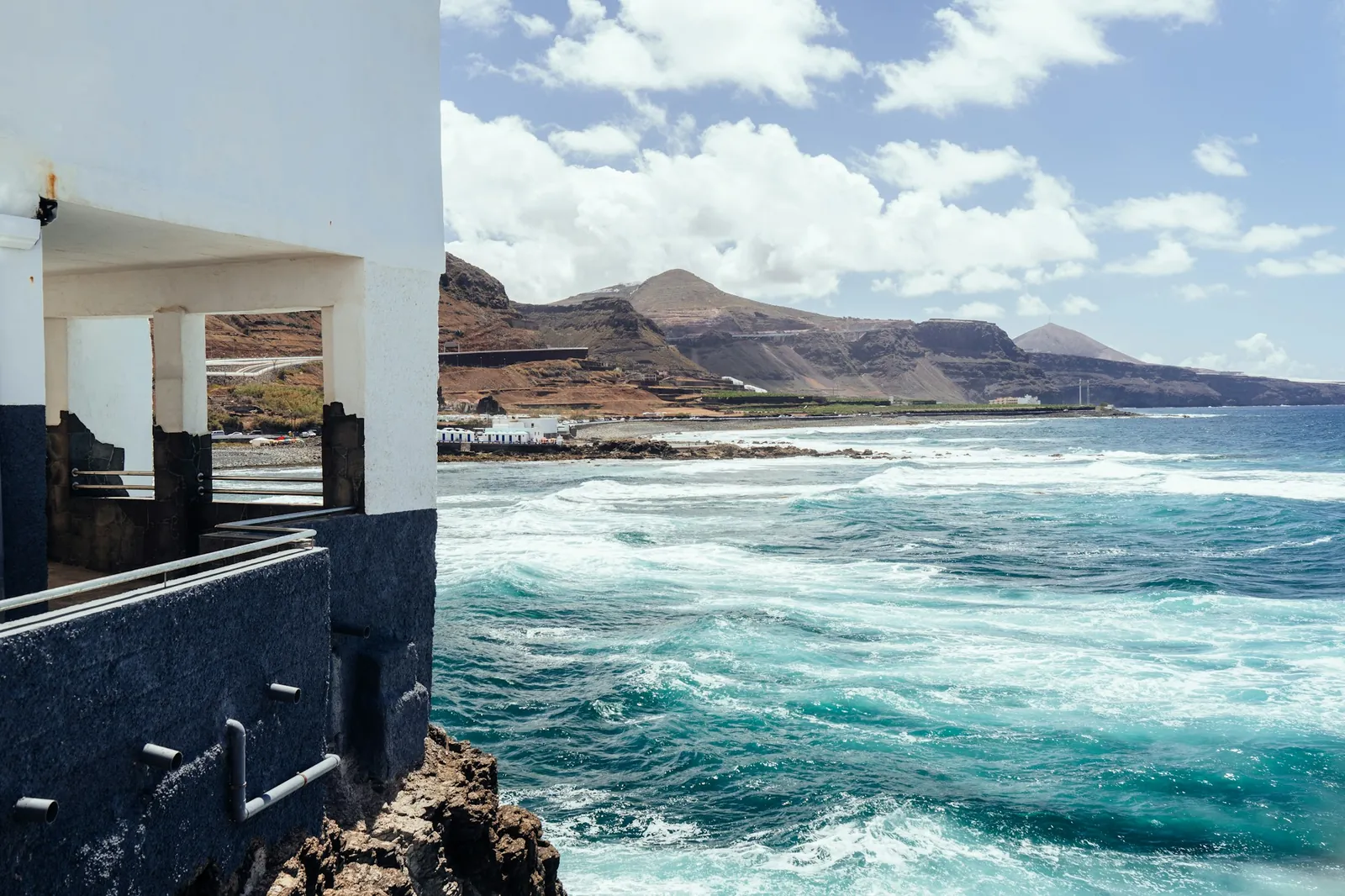
Obey the flag: a red flag means do not enter the water. Lifeguard seasons are not published, swell varies from beach to beach, and in an emergency you call 112.
The short version: look at the flag before you get in, and if it is red, do not enter the water. Choose a beach with a lifeguard for children and weaker swimmers, treat the beaches west of Puerto Rico (Tauro, Playa del Cura, Taurito) with more respect than the calmer ones near Arguineguín, and call 112 if someone is in trouble. Nobody publishes lifeguard hours for individual beaches here, so do not plan around a particular time.
This page is general safety guidance for the sea along Arguineguín, Patalavaca, Anfi and the coast to Puerto de Mogán. It is not a substitute for local signs or instructions from lifeguards, and it is not medical advice. Sun and heat have their own page: sun, heat and UV on Gran Canaria.
What the flags mean
Spanish beaches use a flag system, and GOV.UK advises you to learn it and follow any warnings. The one rule it spells out is that a red flag means you must not enter the water. The colours generally used are:
| Flag | Usual meaning | What to do |
|---|---|---|
| Green | Good conditions for swimming | Swim normally, still take care with children |
| Yellow | Caution: currents or changing weather | Stay close to shore, weaker swimmers should keep out |
| Red | Do not enter the water | Stay out of the water |
| Jellyfish or marine-life flag | Varies by beach | Read the sign; ask the lifeguard |
Green and yellow follow the common convention; the council's own pages do not set out the system, so if a flag, a sign and a lifeguard disagree, do what the lifeguard says. Where there is no flag, no sign and no lifeguard, GOV.UK says to take extra care and ask locally.
Lifeguards: which beaches have them and when
Mogán council's beach pages show a lifeguard service at Las Marañuelas, Patalavaca, Anfi, Amadores, Puerto Rico, Taurito, Costa Alegre and Puerto de Mogán. They list none at Perchel de Arguineguín, Tauro or Playa del Cura. Seasons and hours are not published, so a lifeguard icon tells you the service exists, not that someone is on the tower now. Look for the tower and the flag when you arrive, and ask if you are unsure.
No beach in Mogán holds a Blue Flag for 2026–27; only the marinas at Puerto de Mogán and Pasito Blanco do. A Blue Flag is about water quality and services anyway, not a guarantee of safe swimming.
Currents, swell and rocks
GOV.UK warns that some beaches around Spanish islands have strong undercurrents, that hidden rocks and shallow depths can cause serious injury, and that you should never dive into unknown water. On this coast:
- The council classes the water as calm at Las Marañuelas, Patalavaca, Anfi, Amadores, Puerto Rico and Puerto de Mogán.
- It lists moderate swell at Tauro and Playa del Cura, and moderate waves and currents at Taurito, with a call for extreme caution when there is a ground swell (mar de fondo).
- Tauro lies at the mouth of a ravine, and GOV.UK says not to swim where a river runs into the sea. After heavy rain, stay out of water that looks brown or fast-moving.
- Some beaches here have boulders in or under the water, so enter slowly, feet first.
If you are caught in a current, do not fight it. Float, wave and shout for help, swim parallel to the shore, then angle back. A rip pulls you out; it does not pull you under.
Taurito, Tauro and Cura: not for the first swim. These three list moderate swell, and two of them list no lifeguard. Watch the sea for ten minutes before going in, and skip it on a day when waves are breaking on the rocks.
Drowning figures in the Canaries
The Canary Islands drowning-prevention association "Canarias, 1500 km de Costa" counted 54 drowning deaths in the islands from January to October 2025, against 56 in the same period of 2024. Gran Canaria recorded 15 of them, and Tenerife 16. These figures cover every kind of water, mostly the sea, and include local residents, so they say little about the risk on a calm lifeguarded beach. They do show why the flag and the lifeguard matter. A different national count (the RFESS drowning report) gives different totals, because the methods differ, so compare figures within one source rather than across them.
Jellyfish and Portuguese man o' war
Jellyfish and Portuguese man o' war turn up on the Canarian coast from time to time, and a stranded one can still sting. Whether Mogán flies a special flag for them is not documented, so follow lifeguard instructions. The NHS first aid for jellyfish and similar stings:
- Get local help if you can: a lifeguard or someone with first aid training.
- Rinse the area with seawater, not fresh water.
- Remove spines or tentacle pieces with tweezers or the edge of a bank card, not with bare hands.
- Soak the area in water as hot as you can tolerate for at least 30 minutes.
- Take paracetamol or ibuprofen for the pain.
Do not urinate on the sting, put ice on it, touch tentacles or cover the wound. Sources disagree about vinegar, and the NHS does not mention it, so do not reach for a bottle without a lifeguard's say-so. Get emergency help (in Spain, call 112) for difficulty breathing, chest pain, fits, severe swelling, vomiting, severe bleeding or light-headedness.
Children, older swimmers and everyone else
- Keep small children within arm's reach, even where there is a lifeguard (GOV.UK).
- Use calm, lifeguarded beaches for children: see family-friendly beaches.
- Do not swim after alcohol or a heavy meal, and avoid swimming alone.
- If you have a heart or breathing condition, or are over 60 and unsure of your fitness, swim near the lifeguard and stay within your depth.
- Take sun protection seriously: UV is high all year in the Canaries.
For snorkellers the extra rules (float, bright cap, keep clear of boats) are in snorkelling around Arguineguín. If you go to isolated coves with no lifeguard, read quiet beaches and small coves first, and for a calm choice see the best beaches near Arguineguín.
Who to call
- 112 for any emergency, including someone in difficulty in the water.
- Policía Local de Arguineguín: +34 928 15 88 03 (24 hours, Mogán tourism site).
- Guardia Civil Mogán: +34 928 15 27 20 (24 hours).
For health services in town, see health and medical services in Arguineguín. Travel insurance is a separate question: the GHIC covers state healthcare only.
Frequently asked questions
What does a red flag mean on a Spanish beach?
Do not enter the water. GOV.UK says this explicitly. Yellow means caution, and green means good conditions.
Are there lifeguards on the beaches in Arguineguín?
The council lists a lifeguard at Las Marañuelas and Costa Alegre but none at the town's Perchel beach. Seasons and hours are not published, so check on the day.
Are there rip currents in Gran Canaria?
Yes, some beaches on Spanish islands have strong undercurrents (GOV.UK). If caught, float and signal for help, then swim parallel to the shore.
What should I do if I am stung by a jellyfish?
Rinse with seawater, remove tentacles with tweezers or a card edge, and soak in water as hot as you can tolerate for at least 30 minutes. Do not use ice or urine. Call 112 for breathing difficulty or severe symptoms.
Which beach near Arguineguín is the safest?
None is risk-free. Beaches with calm water and a lifeguard, such as Las Marañuelas, Patalavaca, Anfi and Amadores, are the best starting point.
What is the emergency number in Gran Canaria?
112. It works across Spain and the rest of the EU.
Sources
- GOV.UK – Spain travel advice: swimming, flags, undercurrents
- NHS – jellyfish and other sea creature stings: first aid
- Mogán tourism – beaches: lifeguard listings and sea conditions
- Mogán tourism – security: Policía Local and Guardia Civil numbers
- RTVC – drowning deaths in the Canaries, January–October 2025
- Blue Flag (ADEAC) – 2026 list