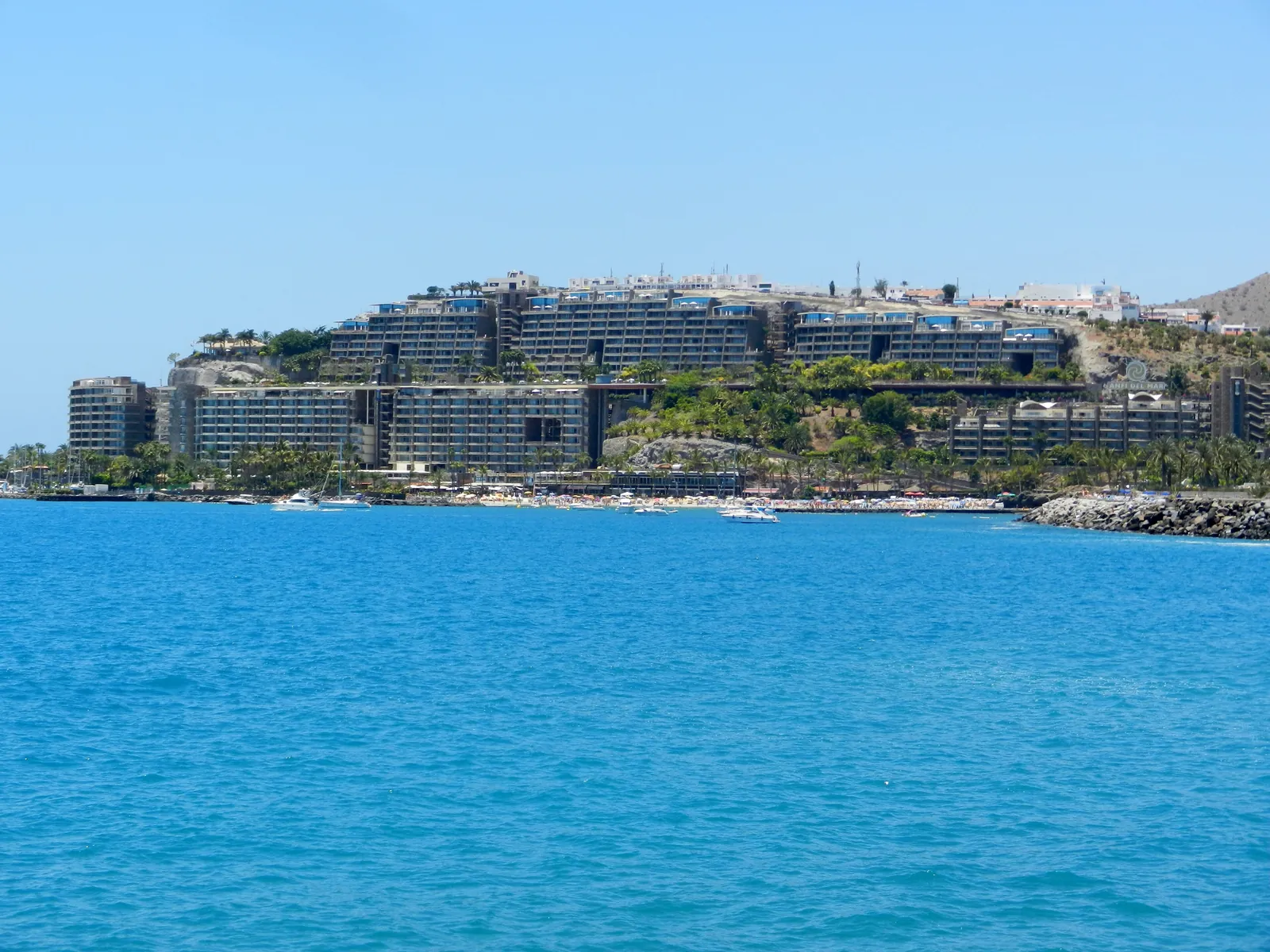
The council marks diving and snorkelling zones at Anfi, Tauro, Playa del Cura and Taurito, plus three small coves nearby. Anfi is the easiest start; the others suit confident swimmers on calm days.
The easiest place to snorkel near Arguineguín is Anfi del Mar: a lifeguarded beach with calm water that Mogán council marks as a diving zone ("zona de submarinismo"). Further west, Tauro, Playa del Cura and Taurito carry the same zone marking, but their water is rated moderate, not calm, and two of the three list no lifeguard. Think of snorkelling here as rock-and-sand snorkelling close to shore, not a coral reef: the interest is fish, sea grass and volcanic rock.
This page is for people with a mask and snorkel. If you want tanks, wrecks and boat dives, see scuba diving near Arguineguín. The facts below come from Mogán's beach pages, a Natura 2000 site fact sheet for the marine strip off Mogán, and the dive operators' own pages (checked October 2026).
Where the council marks snorkelling and diving zones
| Place | Length | Water (council) | Lifeguard listed | Notes |
|---|---|---|---|---|
| Anfi | 180 m | Calm | Yes | Golden sand and boulders; nautical rental |
| Tauro | 440 m | Moderate swell | No | Mouth of the Tauro ravine; restaurants |
| Playa del Cura | 193 m | Moderate swell | No | Step-free, toilets, showers |
| Taurito | 160 m | Moderate, care in swell | Yes | Black sand; nautical rental |
| Los Frailes | 60 m | Clear water | No | "Very interesting" shallow rock shelf; easy access |
| Medio Almud | 87 m | Calm | No | At a ravine mouth; nudism also listed |
| Tiritaña | 86 m | Clear, moderate swell | No | Between cliffs; intermediate access; nudism also listed |
The council's wording is "zona submarinismo", which covers diving and snorkelling alike. "Good for snorkelling" is our reading of that. Los Frailes, Medio Almud and Tiritaña are small, services are minimal or absent, and the council gives no information about parking. According to OpenStreetMap, Los Frailes and Medio Almud are close to Playa del Cura and Tauro, and Tiritaña is by Taurito.
Anfi: the sensible first try
At Anfi del Mar beach you have a lifeguard, toilets, showers and hire of sunbeds, and the council lists nautical rental (it does not say what is rented, so ask whether snorkel sets are available). Stay inside the marked zone and away from the boat traffic that uses the marina. If you are new to snorkelling, practise in knee-deep water first, then work along the rocks rather than straight out.
Tauro, Cura and Taurito: more exposed
Tauro and Playa del Cura lie at the mouths of ravines and list moderate swell. Taurito has a lifeguard, but the council tells swimmers to take extreme care when there is ground swell (mar de fondo). One diving operator names Amadores, Medio Almud, Playa del Cura, Tauro and Taurito as its shore-dive sites, and says Amadores can be murky close to land. In practice the rule is simple: go on a calm morning, go with a buddy, and skip it if the waves are breaking on the rocks.
What you can see
The sea off this coast is part of a protected Natura 2000 site, the "Franja marina de Mogán", which runs along the south and south-west coast for about 35 km of shoreline. The official fact sheet names sea-grass meadows (sebadales, Cymodocea nodosa) and rocky bottoms as the main habitats. Species it mentions include the short-snouted seahorse, the parrotfish known locally as vieja, and the salema. Loggerhead and green turtles are recorded in the area, and the site is an important feeding and resting area for dolphins and whales.
That is a list of what lives in the zone, not a promise for a particular swim. Most snorkellers see small shoals, wrasse and rock-pool fish; a turtle or a seahorse is a bonus, not an expectation. Keep a distance if you meet either, and never touch or feed wildlife.
Sea temperature and the best months
There is no official sea-temperature series for the beaches themselves. A secondary monthly series for Gran Canaria shows:
- February–March (coldest): about 19 °C.
- May–June: about 20–21.5 °C.
- August: about 23 °C.
- September–October (warmest): about 23.5 °C.
- December: about 21 °C.
Most people find 19 °C cold after 20 minutes in the water, so a shorty wetsuit or rash vest helps in winter and spring. The warm months are better for comfort, but check the flag and the forecast rather than the calendar. For land-side weather see Arguineguín in winter.
Snorkelling from a boat
Scuba Sur, a dive centre running a boat from the Anfi marina, lists afternoon trips for mixed groups that include snorkellers (14:00–16:00 on its schedule page) and morning trips for certified divers only. Times, prices and availability change, so check the centre's own page and book ahead. For other sea trips, see boats from Arguineguín.
Safety in the water
GOV.UK warns that beaches around Spanish islands may have strong undercurrents, that hidden rocks and shallow depths cause serious injuries, and that you should not dive into unknown water. For snorkellers that means:
- Check the flag; a red flag means do not enter the water.
- Never snorkel alone, and tell someone ashore where you are going.
- Wear a bright swim cap or tow a float so boats can see you.
- Do not enter the water near moored boats or the harbour mouth.
- Do not snorkel after drinking.
Dolphins in the bay. If dolphins or whales appear, do not swim towards them. Spanish rules for whale and dolphin watching (Real Decreto 1727/2007) forbid bathing or diving within 60 m of cetaceans, and that applies to you as well as to boats.
Jellyfish and Portuguese man o' war occasionally appear on the Canarian coast. Stranded ones can still sting. First aid and flags are in beach safety on the south coast.
Other beaches to compare
If the sea is too rough for snorkelling, switch to a sheltered swim at Patalavaca or Anfi. The full comparison is in the best beaches near Arguineguín, and small coves are in quiet beaches and coves.
Frequently asked questions
Where is the best place to snorkel near Arguineguín?
Anfi del Mar is the easiest: calm water, a lifeguard and a marked diving zone. Tauro, Playa del Cura and Taurito also have marked zones but a rougher sea.
What can you see snorkelling in Gran Canaria?
Fish over rock and sea-grass meadows, with seahorses, parrotfish (vieja) and salema recorded in the Mogán marine strip. Turtles occur in the area but sightings are never guaranteed.
Can you rent snorkel gear in Arguineguín?
The council lists nautical rental at Anfi and Taurito, but not what is rented. Ask on the beach, or bring your own mask and snorkel.
Is the sea too cold for snorkelling?
The sea runs from about 19 °C in February–March to about 23–24 °C in September–October. Many people snorkel in winter with a wetsuit; it is comfortable without one in late summer.
Is snorkelling safe for beginners?
On calm days at a lifeguarded beach such as Anfi, yes. Check the flag, stay close to shore, use a buddy and a float, and avoid the more exposed beaches until you are confident.
Are the diving zones the same as snorkelling zones?
The council marks them as one "zona submarinismo", so snorkelling is not separately defined. Keep away from boats and divers' marker buoys.
Sources
- Mogán tourism – Playa de Anfi: services and diving zone
- Mogán tourism – Playa Los Frailes
- Mogán tourism – Playa de Tiritaña
- MITECO – Franja marina de Mogán (ES7010017): habitats and species
- Scuba Sur – daily diving trips in the south: schedule and sites
- Davy Jones Diving – Gran Canaria dive sites
- BOE – Real Decreto 1727/2007 on protecting cetaceans
- GOV.UK – Spain travel advice: swimming and beaches