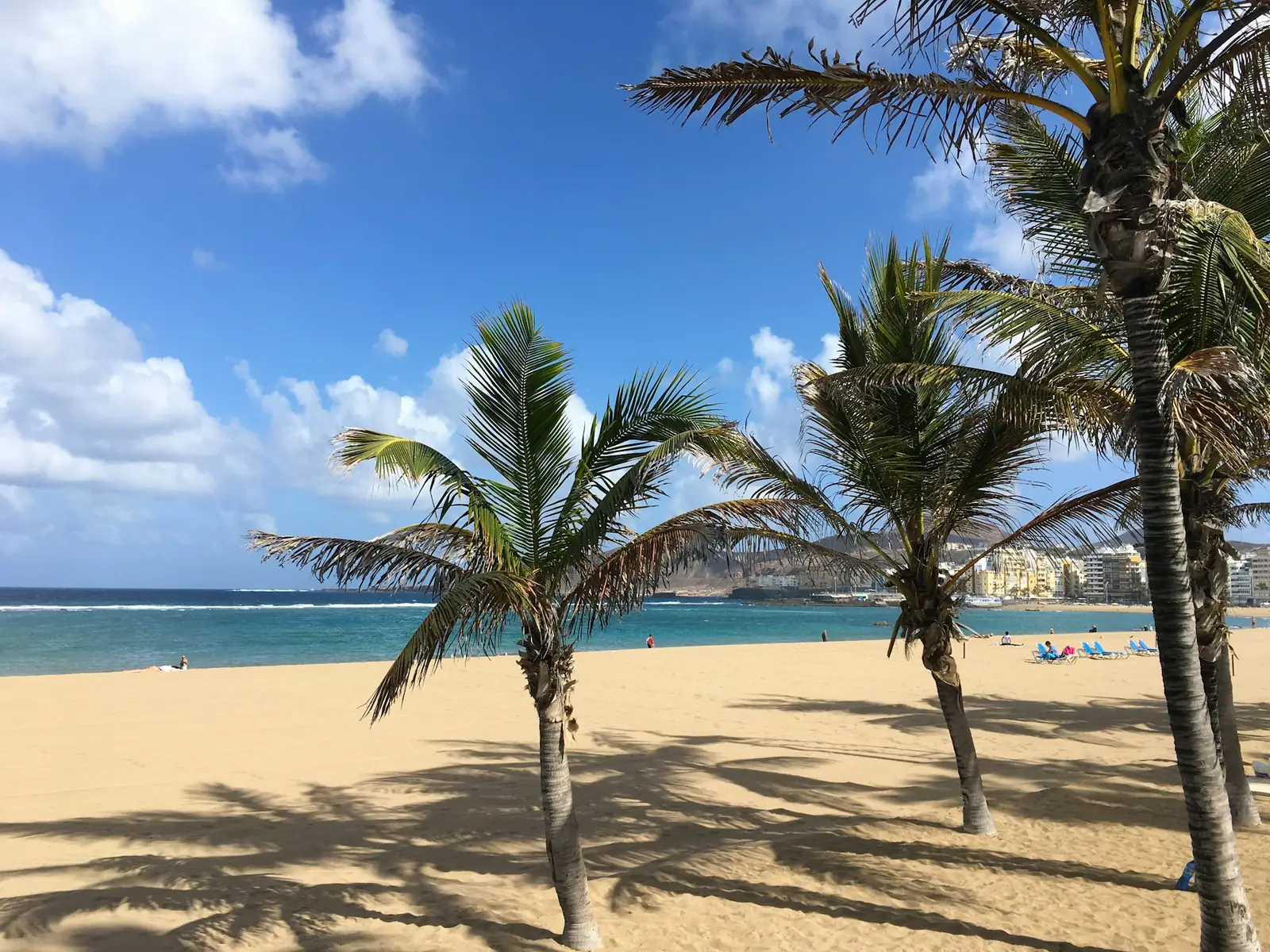
Expect daytime highs of about 21 to 24 °C, a sea of roughly 19 to 22 °C and around six hours of sun a day between November and March. That is warm enough for a T-shirt at lunchtime, but not for every swimmer.
Winter sun in Arguineguín means comfortable, mostly dry days, with highs around 21 to 24 °C, nights that cool to the mid-teens, and a sea that is refreshing rather than warm. The nearest station with official long-term averages, Gran Canaria Airport at Gando, records between 179 and 229 hours of sunshine a month from November to March, which works out at roughly six to seven hours a day. It is a place where you can sit outside to eat in January, and where you will still want a jumper after dark.
That is the version you can rely on. The rest of this page looks at the numbers month by month for the winter only, what the sea is really like for swimming, what a "bad" winter day looks like, and who tends to be happiest here from November to March. For the other seven months and the year as a whole, the month-by-month climate guide and the shorter weather overview are the right pages.
The winter figures, month by month
There are no published long-term climate averages for Arguineguín or for the rest of Mogán. The nearest official station is Gran Canaria Airport, on the east coast, with averages for 1981 to 2010. The south-west is usually sunnier and calmer than Gando, so read these as a cautious reference, not as Arguineguín's own record.
| Month | Average high | Average low | Rain | Sunshine | Sea (island range) |
|---|---|---|---|---|---|
| November | 24.2 °C | 18.1 °C | 22 mm, 3.9 days | 185 hours | 22.2 to 22.5 °C |
| December | 22.2 °C | 16.2 °C | 31 mm, 4.5 days | 179 hours | 20.7 to 20.9 °C |
| January | 20.8 °C | 15.0 °C | 25 mm, 3.1 days | 184 hours | 19.7 to 19.9 °C |
| February | 21.2 °C | 15.0 °C | 24 mm, 3.0 days | 191 hours | 19.0 to 19.2 °C |
| March | 22.3 °C | 15.7 °C | 12 mm, 2.3 days | 229 hours | 18.8 to 19.2 °C |
The temperature, rain and sunshine columns are AEMET's averages for Gando. The sea column comes from a secondary source that gives a range between several Gran Canaria locations, including Maspalomas and Taurito, and is not an official Mogán measurement. A "rain day" is a day with at least 1 mm.
Why the south-west tends to do better than the airport
The island has a wet, trade-wind northeast and a drier southwest, and the central mountains block much of the wind. The Cabildo describes the south-west as the "dry island" zone, and academic work describes the south coast as calm in the lee of the mountains. So if there is cloud on the east coast and in the north, Arguineguín often has gaps in it. We would not promise a cloudless week from any table, because winter on Gran Canaria does have cloudy days and the occasional proper rainy spell. But even with the cloud, the expected total rain in Dec to Feb is small: 24 to 31 mm a month at the airport.
The sea: refreshing, not warm
This is where "winter sun" and holiday-brochure sea collide. In January and February the sea off Gran Canaria is around 19 °C. You will notice it. Some visitors swim every day in winter; many more paddle and sunbathe. The sea is warmest in September and October (around 23.5 °C) and coolest in February and March; by March the air has warmed faster than the water, so it feels cooler than the number suggests.
For families and for anyone who wants a long swim without gasping, the beaches with the calmest water are the sheltered ones, and the pools at your hotel. See the town beach and Patalavaca pages for what each is like. Lifeguards operate seasonally at the main beaches and hours are not published per beach, so check the flag before you go in. In winter, look out for heavier swell as well.
A winter day in practice
Average highs of 21 to 24 °C make the middle of the day the time for the beach, a long lunch outside or a walk. Overnight lows at the airport average 15 to 18 °C, so after sunset you will want a light jacket or a fleece, and sunset comes earlier than in summer. The coastal walks are comfortable at midday in winter, without the summer heat.
The sun is stronger than it looks
The Canary government's public health department says that the Canaries have the highest UV radiation levels in Spain throughout the year. A cool breeze and a 22 °C day can still burn skin that has been under UK cloud for months. The authority's advice at very high levels is high-factor sunscreen daily (SPF 50+), shade in the central hours, a hat, sunglasses and covered arms and legs, with special care for children and older people. Its example forecasts are from July, but the advice is the same at any time of year. A first-day burn is the most common way winter holidays go wrong.
Calima and unsettled spells
Winter is also the season in which Saharan dust is most likely to arrive, according to AEMET: December to March. On those days the sky is hazy, visibility drops and the sun is pale. Our Calima page explains what it is and what to do about it, including the health advice.
Who winter suits
For anyone looking for sunshine and walks rather than hours in the water, winter is the season. Couples and walkers get the best of it; hikers find the mountains usable most of the year, though the high interior is cooler. Families who want a warm sea for the children will find summer and autumn better. Those thinking of staying for months should read the guides to long-term stays and to overwintering: budget, insurance and clinics. The festive weeks are covered on the Christmas and New Year page.
Getting there takes about four hours from the UK; see flights to Gran Canaria, where the Canary Islands share UK clock time all year.
Frequently asked questions
What is the weather like in Arguineguín in winter?
At the nearest official station, daytime highs between November and March average 20.8 to 24.2 °C with lows of 15 to 18 °C, and rain falls on 2 to 5 days a month. The south-west coast is usually sunnier and calmer than that east-coast station.
Can you swim in the sea in Arguineguín in winter?
Yes, though the water is cool. Island-wide averages for January and February are about 19 to 20 °C, so many visitors swim briefly and sunbathe longer. Check the beach flags before you go in.
How many hours of sun does Gran Canaria get in winter?
At Gran Canaria Airport the monthly averages for November to March are 179 to 229 hours, about 6 to 7 hours a day. The south-west is usually sunnier, but no official figure for Arguineguín is published.
Do I need a jumper in Arguineguín in January?
For the evenings, yes. Overnight lows average about 15 °C at the airport, and a light jacket is useful after sunset.
Can I get sunburnt in winter in Gran Canaria?
Yes. The Canary Islands health authority says the Canaries have Spain's highest UV levels all year round. Use sun protection from the first day.
When is calima most likely?
AEMET says the Saharan dust episodes are most frequent from December to March. See the Calima page.
Sources
- AEMET: climate normals 1981 to 2010, Gran Canaria Airport (Gando)
- Temperatura do Mar: monthly sea temperatures on Gran Canaria (secondary source)
- Gran Canaria Turismo (Cabildo): climate zones of the island
- RTVC: AEMET on the calima season in the Canaries
- Government of the Canary Islands: public health warning on UV radiation