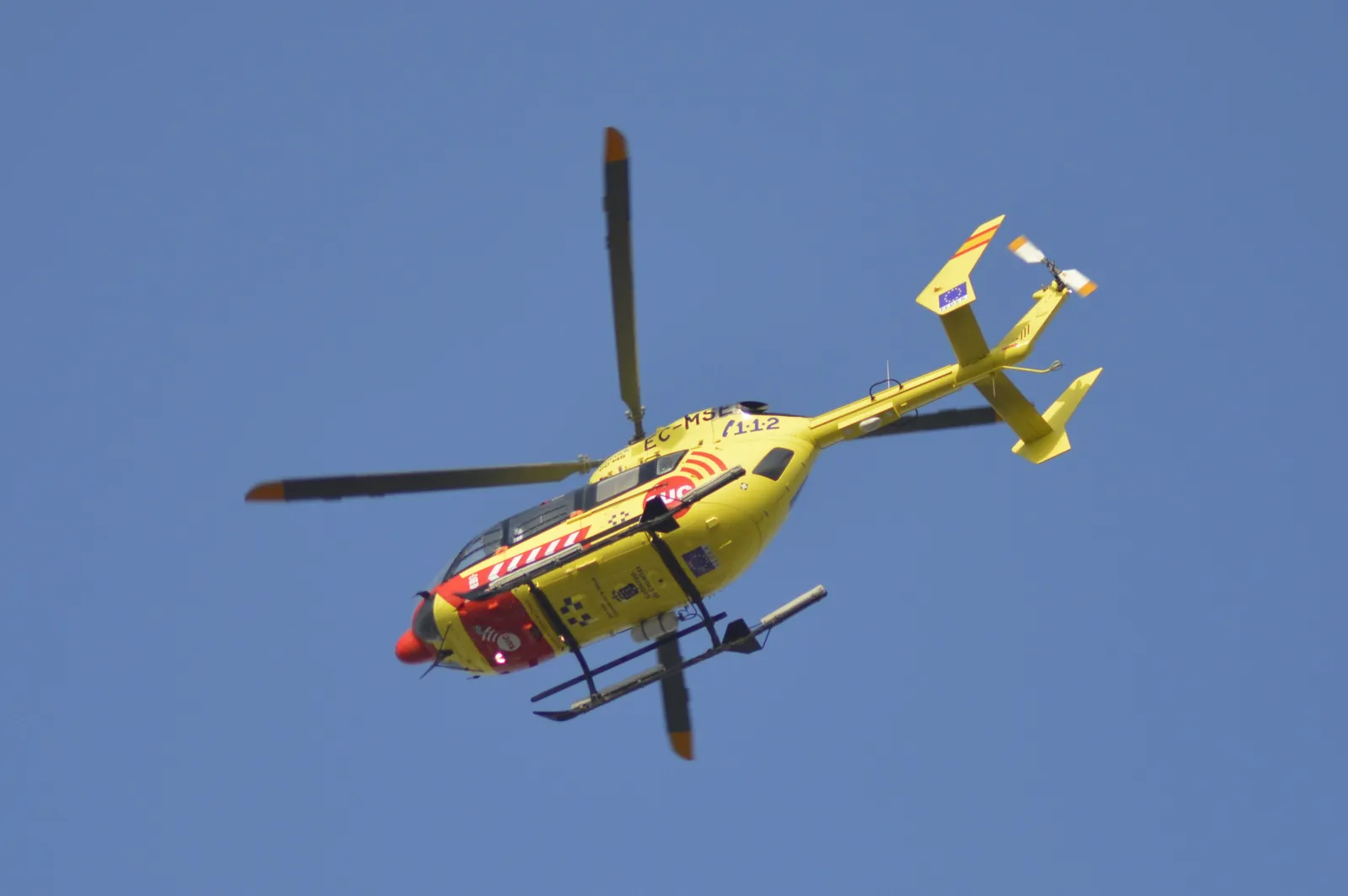
In any emergency in Arguineguín, call 112 for ambulance, fire or police. The nearest A&E departments are private hospitals in San Agustín and Meloneras; the public hospitals are in Las Palmas.
The number to remember is 112. It is free, it works from any phone, and the British government's own travel advice for Spain lists it as the line for ambulance, fire and police. You do not need to choose a service before you dial; say what has happened, where you are, and let the operator send the right people.
Everything else on this page is for after the first call: where the nearest doctors and hospitals are, what to do about a stolen bag or passport, and who to contact at the British consulate in Las Palmas. For the wider picture of pharmacies and clinics, the health and medical services guide goes into more detail.
What to say when you call 112
Keep it short and give the location first. In a town where half the visitors are in a rented apartment they cannot name, that is the part that slows things down. Before you need it, save your accommodation's address in your phone's maps app; the FCDO suggests exactly that.
- Where you are: street or beach name, the nearest bar, hotel or landmark, and the municipality. Arguineguín, Patalavaca and Anfi are all in Mogán.
- What has happened: one sentence. «Ambulance, please» and «police, please» work in English; the Spanish below works too.
- How many people and how serious: conscious or not, breathing or not.
- Stay on the line until the operator ends the call, and send someone to the road to wave the ambulance in if you can.
| You say | It means |
|---|---|
| Necesito una ambulancia | I need an ambulance |
| Hay un incendio | There is a fire |
| Me han robado | I have been robbed |
| Se ha ahogado alguien | Someone is drowning |
| Estoy en Arguineguín | I am in Arguineguín |
More survival Spanish, with pronunciation, is on the Spanish phrases page.
Other numbers worth having in your phone
112 covers everything, but a few direct lines exist and are useful to know about. The FCDO gives 062 for the Civil Guard when you need mountain rescue, which matters if you are walking inland. The national and local police also have their own lines (091 and 092 are the usual Spanish numbers), though a visitor loses nothing by dialling 112 and letting the operator route the call.
- Emergencies of any kind: 112.
- Mountain rescue or Guardia Civil: 062 (FCDO), or 112.
- Your insurer's emergency line: on your policy documents. Ring it as soon as you are sent to a hospital; the FCDO asks travellers to contact their insurer or assistance company quickly. See travel insurance, GHIC and EHIC for what a policy should cover.
- UK government, urgent help from London for a friend or relative abroad: +44 20 7008 5000 (24 hours).
Do not use 061 as a Canary Islands health line; it is a regional number elsewhere in Spain, and for the Canaries 112 is the number the authorities and the FCDO give.
The health centre in Arguineguín and where urgent care is
The Centro de Salud de Arguineguín is on Calle Damasco. It opened in 2006 with its own emergency service, a resuscitation room and an observation area, and it is the public point of care on this stretch of coast. The Mogán tourism site lists its consultation hours as Monday to Friday, mornings and afternoons. Current out-of-hours opening is not published on that listing, so for anything urgent in the evening or at the weekend ring 112 rather than turning up and hoping.
The centre treats you under the Spanish public system. UK visitors with a valid GHIC or EHIC can use it for medically necessary care on the same terms as residents. That card does not cover repatriation, non-urgent treatment or private hospitals.
Hotel doctor, private bill. The FCDO warns that in tourist areas hotels may call private doctors or ambulances that take patients to private hospitals, where the GHIC or EHIC is not accepted. If you hold a GHIC and want state care, say so clearly when the ambulance is called, and tell your insurer early.
Hospitals: Las Palmas, San Agustín and Meloneras
There is no hospital in the municipality of Mogán, and no public hospital in the south of the island. A frequent mistake online is «Hospital del Sur»; that is the public hospital in south Tenerife. On Gran Canaria the picture is this.
| Hospital | Where | Public or private | Notes |
|---|---|---|---|
| Hospital Universitario Insular-Materno Infantil | Las Palmas | Public | Separate emergency departments for adults, children and gynaecology |
| Hospital Universitario de Gran Canaria Dr. Negrín | Las Palmas | Public | Large public hospital |
| Hospiten Roca | Calle Buganvilla 1, San Agustín | Private | 24-hour emergency service, including children's emergencies, every day of the year; tel. +34 928 76 90 04 |
| Hospital San Roque Maspalomas | Calle Mar de Siberia 1, Meloneras | Private | Has an emergency (urgencias) department; tel. +34 928 40 40 40 |
Distances by road from Arguineguín are about 63 km and 49 minutes to Las Palmas in normal traffic, and about 13 km to the Maspalomas lighthouse area, which is the direction of Meloneras and San Agustín. Serious cases from the Mogán coast are often taken to the public hospitals in Las Palmas, but no official catchment rule is published, so the paramedics decide. If you are able to choose and you are insured, a private hospital in the south is the closer option for non-critical problems.
The private hospitals do not accept the GHIC or EHIC. Expect to pay or to have your insurer guarantee payment, which is why the call to the insurer matters.
Pharmacies and out-of-hours medicine
For a minor problem, a pharmacist is the fastest start. The Mogán tourism list shows three pharmacies in Arguineguín: one on Calle Viera y Clavijo (listed Monday to Friday 08:30–21:30, Saturday 09:15–13:00), one on Calle Alonso Quesada and one on Calle Francisco Navarro (both listed Monday to Friday 09:00–21:00, Saturday 09:00–14:00). The list is undated, so check the hours on the door. Spanish pharmacies post the rota of the duty pharmacy (farmacia de guardia) in the window; the Colegio Oficial de Farmacéuticos de Las Palmas holds the island rota.
If you need a prescription medicine, bring the box or the generic name, not just the brand. On a GHIC, visitors pay part of the price of a prescription at the pharmacy; UK State Pension holders pay a smaller share.
Police, theft and lost passports
Petty theft is the main risk in Mogán, not violence: the Interior Ministry's provisional figures for 2025 record 884 thefts and 14 violent robberies in the whole municipality, which has a very large tourist population. The page on whether Arguineguín is safe puts those figures in context. If something is taken, the steps are the same everywhere in Spain.
- Make the report in person at a station of the Policía Nacional or the Guardia Civil, or file a minor-offence report such as a stolen bag online, as the FCDO describes. Violent crime and sexual assault must be reported in person.
- Ask for a copy of the denuncia. Your insurer will want it, and so will the consulate if your passport has gone.
- If a passport is lost or stolen, contact the consulate (below) for an emergency travel document.
- Cancel bank cards straight away through your bank's 24-hour line, before you do anything else with the phone.
Hire-car travellers should note the FCDO warning about people who flag down foreign-registered or rental cars on motorways, claiming a fault. Stop only in a lit public place such as a service station, and remember that genuine police in Spain will only ask for your vehicle documents.
The British consulate in Las Palmas
The UK has a consulate in the island's capital: the British Consulate Las Palmas de Gran Canaria, Calle Luis Morote 6-3º, 35007 Las Palmas. Public access is by appointment only. In an emergency, the FCDO tells you to use the contact form on its Las Palmas consulate page, or ring the British consulates in Spain on +34 917 146 300 or +44 20 7008 5000. The consulate cannot give legal or medical advice, but it can help with a lost passport, a serious accident, an arrest or a death.
Visitors from other countries should contact their own embassy or consulate; its emergency line will be on its website. Las Palmas is about 49 minutes from Arguineguín by car in normal traffic, so ring first rather than travel on spec.
Beach, sea and sun emergencies
On the beach the first call is to the lifeguard, if there is one; lifeguards are seasonal and at the main beaches, and hours are not published per beach, so look for the tower and the flag. A red flag means do not enter the water. The FCDO adds that some Spanish island beaches have strong undercurrents and that you should take extra care where there are no lifeguards, flags or signs. Anyone in difficulty in the water: call 112 and do not swim out after them. The page on beach safety on the south coast covers flags and currents.
For a jellyfish sting, NHS advice is to rinse with seawater (not fresh water), remove spines or tentacles with tweezers or the edge of a bank card, and soak in water as hot as you can comfortably stand for at least 30 minutes. Do not use ice, and do not urinate on the sting. Call 112 for breathing difficulty, chest pain, seizures or severe swelling.
Heat and sun are a risk all year: the Canary health authorities say the Canaries have the highest UV levels of any region in Spain. The sun and heat page has the details.
If you or someone with you has limited mobility
Tell the operator if the patient cannot walk, uses a wheelchair or needs oxygen; it changes the equipment sent and the way you are carried. Ramps, beach mats and accessible toilets are covered in the accessible Arguineguín guide. For getting yourself to a clinic when it is not an emergency, the Mogán taxi cooperative lists a 24-hour number, +34 928 15 27 42 (see taxis in Arguineguín), and the buses page shows what runs along the coast.
Frequently asked questions
What is the emergency number in Gran Canaria?
112, for ambulance, fire and police, free from any phone. It is the number the UK government gives for Spain. Do not rely on 061, which is a regional health number elsewhere in Spain.
Is there a hospital in Arguineguín?
No. Arguineguín has a public health centre on Calle Damasco with an emergency service, but the nearest A&E departments are private hospitals in San Agustín (Hospiten Roca) and Meloneras (San Roque), and the public hospitals are in Las Palmas.
Does my GHIC work at the Arguineguín health centre?
A UK GHIC or EHIC covers medically necessary care in Spain's public system, which includes the health centre and the public hospitals. It is not accepted at private hospitals and does not pay for repatriation, so you still need travel insurance.
Where do I report a stolen wallet or passport in Arguineguín?
At a Policía Nacional or Guardia Civil station, where you can file a denuncia; minor thefts can also be reported online. Keep a copy for your insurer, and contact your consulate if a passport is gone.
Is there a British consulate on Gran Canaria?
Yes, in Las Palmas de Gran Canaria, on Calle Luis Morote. Access is by appointment only, and the FCDO asks you to use its contact form or the consulates' emergency number.
Do operators on 112 speak English?
The official sources do not publish a language guarantee, so give your location slowly and clearly and use simple words. If you can, have someone local or your accommodation staff speak for you.
Sources
- FCDO travel advice for Spain, Getting help – emergency number, reporting crime, consulate contacts
- FCDO travel advice for Spain, Health – 112 for an ambulance, GHIC and private hospitals
- FCDO travel advice for Spain, Safety and security – theft, car scams, swimming, mountain rescue 062
- British Consulate Las Palmas de Gran Canaria – address and access
- Mogán tourism – health centres and pharmacies
- Hospiten Roca – 24-hour emergency service
- Hospitales San Roque Maspalomas – address and contact
- NHS – jellyfish and other sea creature stings