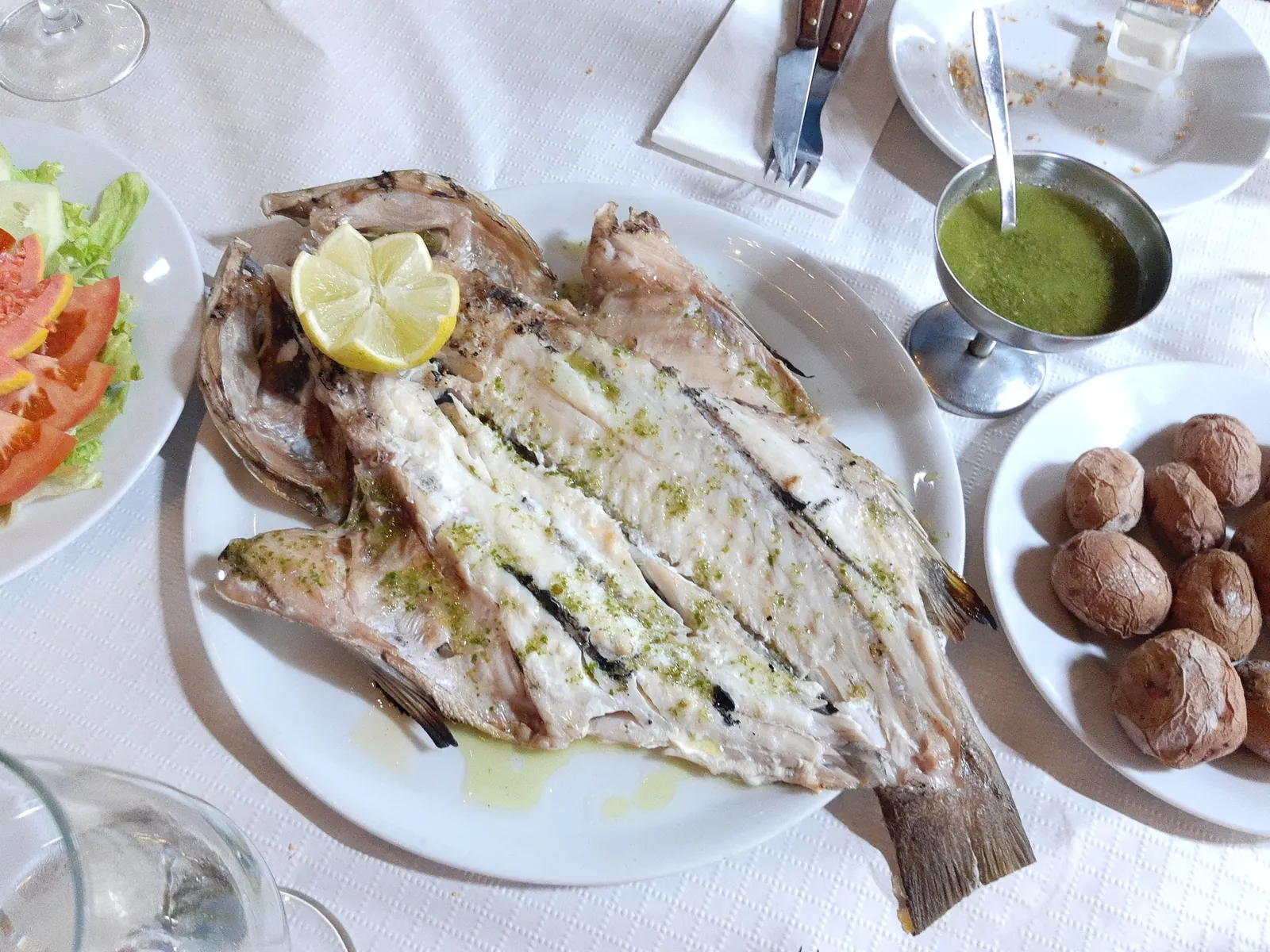
The best-known place for fresh fish is the fishermen's cooperative restaurant at the harbour. Ask for the pescado del día, and look for vieja, sama or cherne, grilled or fried, with papas arrugadas and green mojo.
Arguineguín is a working fishing port, and the simplest way to eat well here is to go where the fish lands: the fishermen's cooperative restaurant at the harbour, the Cofradía de Pescadores. Order the fish of the day, ask how it is cooked, and expect it with papas arrugadas (small salty potatoes) and a green or red mojo sauce. Elsewhere in town, the trick is to know a handful of Canarian fish names so that you can tell a local catch from a generic grilled white fish.
This page covers the fish you will meet on menus, how to order it, and where in Arguineguín to look for it. The harbour itself and the cooperative's history belong to the fishing harbour page; the cooperative restaurant has its own review.
What comes off the boats at Arguineguín
The boats that come into the harbour every day bring in various species of tuna, according to the Barceló travel guide. That does not mean that every fish on every plate in town is landed on the quay. The wider Gran Canaria fishing fleet supplies most of the island, and restaurants buy from several sources. What you can say with confidence is that the cooperative is where visitors are directed for fish soup, limpets in mojo and fresh fish, and that Arguineguín is one of the Canarian fishing cooperatives with a reputation for the fish called vieja.
The fish worth asking for
Menus in the tourist streets often say only "fish of the day" or "grilled fish". These are the names that matter locally.
| Name on the menu | What it is | How you will usually meet it |
|---|---|---|
| Vieja | Parrotfish. The classic Canarian fish; its flesh is often compared to shellfish | Boiled whole (sancochada), fried or grilled, with mojo and potatoes |
| Sama | Dentex, a pink bream | Grilled whole or a la espalda (split, see below) |
| Cherne | Wreckfish, a deep-water grouper | Grilled or baked; also in stews |
| Medregal | Amberjack, meaty | Sold as steaks |
| Rascacio | Scorpionfish | Mostly for fish soup |
| Pescado de barquillo | Small fish from inshore boats | Fried or grilled |
Vieja is the one to try if you try only one. It is abundant on the rocky seabed around Gran Canaria and is most plentiful between May and November, but you can find it on menus all year, subject to the day's catch. The common way to cook it is boiled whole in a salted broth and served with olive oil, lemon, green mojo and wrinkly potatoes. Peel back the skin and scales with a fork from head to tail and the flesh comes away cleanly.
The words you need on the menu
- A la espalda: the fish is split open along the back and grilled skin-side down, usually with plenty of garlic.
- A la sal: baked whole in a salt crust.
- Frito: fried. For small fish and for vieja this is often the best way, and it is how reviewers say the cooperative serves much of its fish.
- Lapas: limpets, grilled and served with green mojo. They are chewy and taste of the sea; many people love them and some do not.
- Chipirones: small grilled squid. Pulpo frito: small octopus fried whole.
- Puntitas de calamar: tiny battered squid, a bit like seafood popcorn.
- Gambas al ajillo: prawns in garlic and oil.
- Sancocho: a traditional stew of salted fish, potatoes and sweet potato, served with mojo. An acquired taste; the official Spanish tourism board describes it as salted fish soaked overnight and then cooked with the vegetables.
- Gofio escaldado: a thick gofio and fish-broth porridge, eaten alongside seafood.
The sauces, the potatoes and the rest of the Canarian table are explained properly on Canarian food to try. If you want to practise a few words before you go, Spanish phrases for Arguineguín covers the restaurant basics.
How to order a whole fish without a shock
Whole fish is often sold by weight, so the price on the menu may be "per kilo" rather than per plate. This is normal in Spain, and in many places the waiter will bring the fish to the table or show it to you before it is cooked. Ask what it will weigh and roughly what that comes to, and ask what comes with it. A big whole fish is meant to be shared by two. If the menu lists only a price with no explanation, ask. Nobody will mind.
Fish of the day depends on the catch, so the answer to "what do you have?" is more useful than the written menu. The word to ask for is pescado del día, followed by "¿cómo lo preparan?" (how do you cook it?). Details of what a typical meal costs and how tipping works are on eating out: prices, tipping and customs.
Frozen fish on a tourist menu. One Gran Canaria guide warns that in heavily touristed resorts some restaurants sell imported frozen fish as if it were local. Ask whether the fish is local and fresh today. A restaurant that cannot or will not tell you is worth skipping. The same rule applies to paella: order it only if the menu says it needs time to prepare, since a paella that arrives in minutes is probably not made to order.
Where to eat fish in Arguineguín
The cooperative at the harbour. The Cofradía de Pescadores is a fishermen's association restaurant by the quay (Muelle de Arguineguín). Reviews in 2026 praise the seafood, and it is busy at weekends, so book or arrive early. There is also a cooperative restaurant at Puerto de Mogán, and listings sometimes confuse the two, so check which one you are looking at.
Restaurants in town. Reviewers of Los Canarios 1 say that fish is the thing to try there, and 2026 reviewers of El Marino Chico describe the fish as excellent even where the meat was less convincing. Taste Mesón serves fish in a different way, with tacos, ceviche and a wine-matched tasting menu. In every case, the daily fish depends on the catch, so we do not list specific dishes as always available.
For the full picture of where to eat, including non-fish options, go to the best restaurants in Arguineguín, or to restaurants with a sea view if you want your sunset with it.
Catching it yourself
If you would rather catch dinner, fishing trips and sea fishing explains the options. Recreational sea fishing in the Canaries needs a Canary Islands licence (Decreto 182/2004), so find out about it before you pack a rod.
Frequently asked questions
Where can I eat fresh fish in Arguineguín?
The best-known place is the Cofradía de Pescadores, the fishermen's association restaurant at the harbour. Several restaurants in town also serve fish. Ask for the fish of the day and whether it is fresh and local.
What is vieja fish?
Vieja is the Canarian name for a parrotfish, probably the most typical fish in Canarian cooking. It is usually boiled whole, fried or grilled and served with mojo sauce and wrinkled potatoes.
What should I order if I do not know fish?
Ask for the fish of the day, grilled. Sama and cherne are mild, firm white fish that suit most tastes. Add papas arrugadas and green mojo.
What is the difference between mojo verde and mojo rojo?
Mojo verde is the green sauce, made with coriander or parsley and garlic, and goes with fish. Mojo rojo (mojo picón) is the red one, made with pepper, garlic, vinegar and spices and goes with meat and potatoes. Both are usually served with papas arrugadas.
Is fish more expensive than meat in Arguineguín?
Whole fish sold by weight can cost more than a main course of meat, so ask the price before you order. A smaller plate of fried fish or squid is a cheaper way in.
Should I book the cooperative restaurant?
Yes, especially at weekends. Reviewers say it fills up and recommend reserving or arriving early.
Sources
- Gran Canaria Info: fish and seafood glossary (sama, medregal, a la espalda, lapas and more)
- Marca Canaria: vieja, species, season and how it is cooked (Spanish)
- Local Guide Gran Canaria: typical fish and the warning about frozen fish
- Barceló travel guide: Arguineguín harbour, tuna landings and the fishermen's association
- Turespaña: Canary Islands cuisine (sancocho, mojo, papas arrugadas; Italian-language page)
- Gastroranking: dated 2026 reviews for the Cofradía de Pescadores, Arguineguín