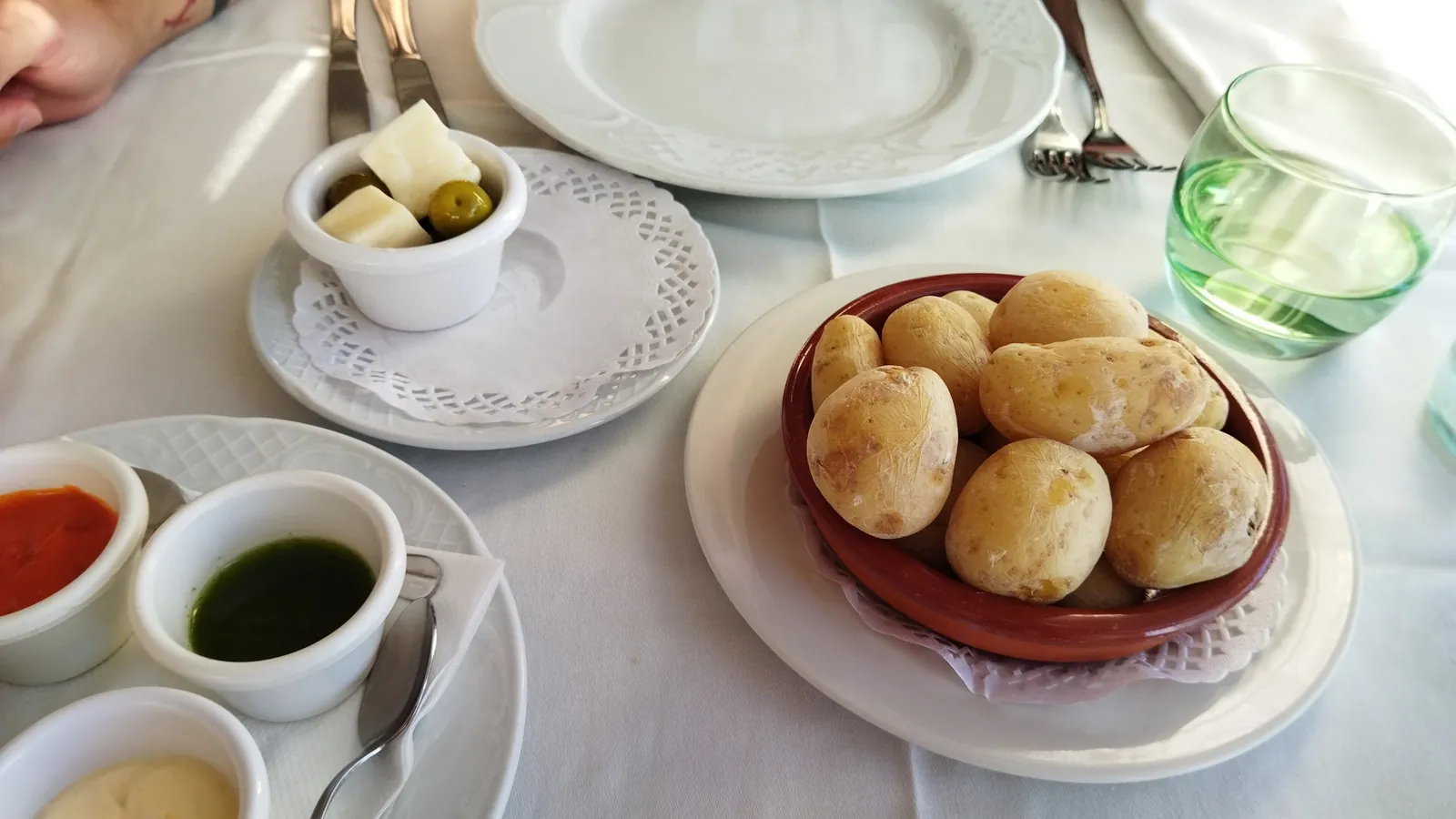
Start with papas arrugadas and mojo, then order whatever fish is fresh; add Gran Canaria cheese, local wine and a Canarian rum or dessert to finish.
If you only try three things, make them papas arrugadas with mojo, the fresh fish of the day and a wedge of local cheese. Arguineguín is a working fishing harbour, which tilts the best of its menus towards the sea. The rest of Canarian cooking, from toasted-grain gofio to almond desserts and island rum, is easy to find once you know the names.
This page is a menu decoder: what each dish is, how it usually arrives, and what to ask for. Where to eat it is covered in the best restaurants in Arguineguín; what it costs is in the eating-out guide.
Papas arrugadas and the two mojos
Small potatoes are boiled in their skins in very salty water, sea water if possible, until they wrinkle and take on a white salt crust. That is papas arrugadas. They arrive with mojo, and Turespaña, Spain's tourism board, describes the two classics like this: mojo picón is made with pepper, vinegar, olive oil, garlic, cumin, salt and paprika; mojo verde uses parsley and coriander and has a milder, fresher taste.
Order them as a starter for the table. Eat the skin as well. You will also meet mojo with grilled fish, meat and cheese, and there are other versions (garlic, saffron, cheese) that some kitchens make. If you want potatoes to be the heart of a meat-free meal, vegetarian and vegan eating in Arguineguín builds on them.
Fish and shellfish: what the local menus mean
Turespaña lists the fish most associated with the islands: vieja (parrotfish) first of all, then grouper (mero on menus), bream, sea bass, sea bream and mackerel. Fish is cooked grilled, baked in salt, or jareado (dried in the sun and seasoned). Ask what came in that day and how the price is set, as larger fish are often sold by weight.
Other things worth knowing:
- Lapas (limpets): grilled on a hot plate, usually with mojo verde. Turespaña describes them as typically a summer dish.
- Sancocho canario: salted fish soaked overnight, cooked with half-peeled potatoes and sweet potato, served with mojo picón or verde.
- Tollos: a traditional dish made with smooth-hound shark.
- Soups: fish and vegetable soups appear as starters at harbour restaurants.
The fishermen's association restaurant at the harbour, described in Cofradía de los Pescadores, is the natural place to try this food, and seafood and fresh fish in Arguineguín goes deeper into species, weights and how to order.
Gofio: the grain behind the cuisine
Gofio is toasted wheat or maize flour. Turespaña says it can be a breakfast, an accompaniment to stews, or even a local nougat-like sweet. You may meet it in escaldón (a savoury paste stirred into hot broth), stirred into milk or coffee, or in desserts and ice cream. It tastes nutty and slightly sweet, a little like malted cereal. A small packet from a supermarket is a decent, cheap souvenir; see shopping in Arguineguín.
Meat and mountain dishes
Inland cooking is heavier. Conejo en salmorejo is rabbit marinated in a garlic and paprika sauce; cabrito (kid goat) and goat stew appear on mountain menus; ropa vieja is a chickpea and shredded-meat stew. These are more likely at village restaurants up the valleys than on the harbour front, although a Canarian restaurant in town will usually have one or two. (Do not confuse the Canarian salmorejo sauce with the cold tomato soup of the same name in Andalusia.) Pork, chicken and beef are all on island menus as grills and steaks.
Gran Canaria cheese: Queso de Flor de Guía
The island's own cheese is Queso de Flor de Guía, from the Guía area in the north, and it is protected: Queso de Flor de Guía, Queso de Media Flor de Guía and Queso de Guía share an EU protected designation of origin, registered in 2010. The "flor" version is set with the flower of a wild thistle rather than animal rennet, which gives it a soft, slightly herbal character; the Media Flor mixes thistle and animal rennet.
You will usually see it as a starter board, as queso asado (grilled, often with mojo or sweet jam), or as a tapa. Ask for "queso de la isla" and the staff will tell you where it comes from. The same ingredient supports a tapas lunch in Arguineguín.
Wine, beer and rum
Wine. "Gran Canaria" is a protected designation of origin for wine. The specification covers white, rosé, red, sparkling, sweet and fortified styles, with minimum alcohol of 10% for white, rosé and sparkling and 11% for red. Most island wine is made in small quantities and rarely leaves the archipelago, so a glass of local white or red is worth trying. Taste Mesón in Plaza de las Marañuelas is the town's wine-led restaurant (see its profile).
Beer. The local lager on Gran Canaria is Tropical; a small draught is a caña, a taller glass a tubo.
Rum. Arehucas is the best-known Canarian rum, a brand made by Destilerías Arehucas in Arucas in the north of the island, which offers distillery visits (a day trip from the south; opening hours are on its website). It is a brand, not a protected origin. Ronmiel, honey rum, is a sweeter, lighter liqueur served chilled after dinner, and a common souvenir. Our sister site has a profile of the Arehucas distillery tour.
Coffee. The barraquito is a layered coffee with condensed milk, liqueur, lemon peel and cinnamon, served in a glass. It is on café menus across the islands; ask whether the liqueur is included if you prefer it without alcohol. Plain café con leche and cortado are the everyday orders; see breakfast and cafés.
Desserts and sweets
Turespaña names bienmesabe, a cream of ground almonds and honey, as a classic ending, and lists almendrados and marzipan as Gran Canaria's own sweets. Gofio also turns up in ice cream and mousses. If you see a chocolate, almond or banana pudding on the board, ask what is in it; many contain egg, milk or alcohol. The plain choice of fruit is excellent: the islands grow bananas, papaya, mango, avocado and pineapple, and Turespaña lists them among the island fruit.
How to order the first meal
Arguineguín first-night order: papas arrugadas with both mojos, grilled cheese, one fish from the day's catch (check the price by weight), a glass of local white wine, and a barraquito or a ronmiel to close. That covers the island on one table.
Canarian restaurants vary in how traditional they are, and many tourist-area menus are international. If you want the real thing, look for a menu with papas, mojo, gofio and local fish, and ask what the kitchen is proud of. For the practical side, such as menú del día lunches, cover charges and tips, go to eating out: prices, tipping and customs, and for the view while you eat see restaurants with a sea view. Sister site canaryguide.info covers the cuisine across all the islands.
Frequently asked questions
What is the national dish of the Canary Islands?
There is no official one, but papas arrugadas con mojo is the dish most closely identified with the islands. The salted potatoes and the red and green sauces appear at almost every meal.
What is mojo sauce made of?
Mojo picón is made with pepper, vinegar, olive oil, garlic, cumin, salt and paprika, according to Spain's tourism board. Mojo verde is based on parsley and coriander instead. Recipes vary by kitchen.
What is gofio?
Gofio is toasted and ground wheat or maize. Canarians eat it with milk, in stews, as a paste called escaldón, or in sweets. It has a nutty taste and is sold in supermarkets as a packet of flour.
Is Gran Canaria cheese protected?
Yes. Queso de Flor de Guía, Media Flor de Guía and Queso de Guía are an EU protected designation of origin, registered in 2010. They come from the Guía area in the north of the island.
Is Arehucas rum a protected product?
No. Arehucas is a brand of rum made in Arucas on Gran Canaria. Gran Canaria wine and Guía cheese have protected designations; the rum does not.
What should I order for lunch in Arguineguín?
Ask what fish came in that morning, and add papas arrugadas with mojo and a salad. If you want to keep costs down, look for a menú del día on weekday lunchtimes.
Sources
- Turespaña (spain.info): Canary Islands cuisine, covering gofio, mojo, papas arrugadas, fish, sancocho, limpets and desserts
- EU Commission Regulation 783/2010: registration of Queso de Flor de Guía, Media Flor and Guía as PDOs
- Spanish Ministry of Agriculture: specification for Gran Canaria wine (DOP)
- Destilerías Arehucas: the distillery in Arucas and its visits
- canaryguide.info: Canarian food overview