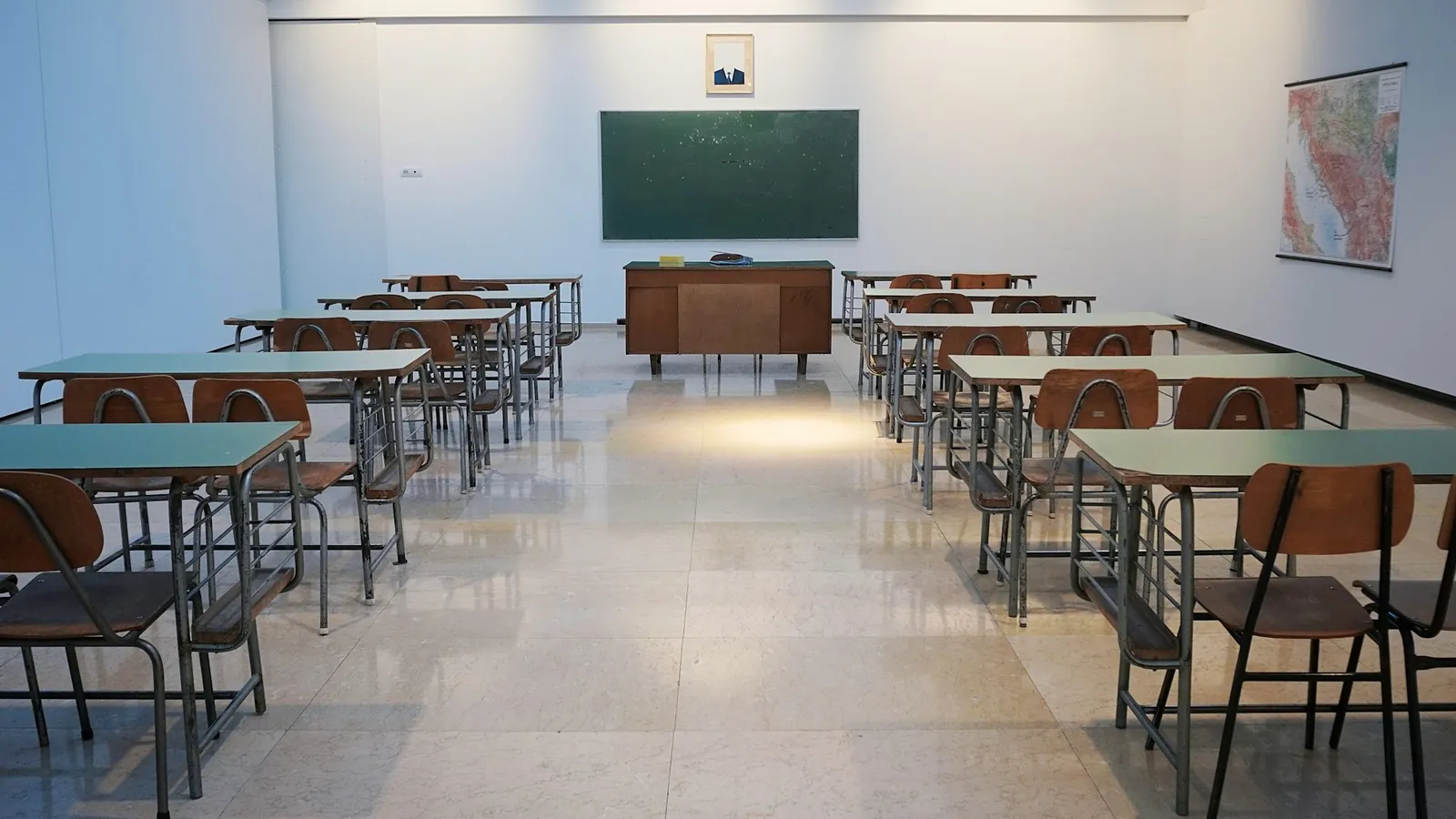
Arguineguín has its own state primary school and secondary school, and the Norwegian school sits a few minutes up the coast in Barranco de la Verga. British-curriculum private schools are further away, in the Maspalomas area and Las Palmas.
Children living in Arguineguín have a full state school route on the doorstep: CEIP Playa de Arguineguín for ages 3 to 12 and IES Arguineguín for secondary. For families who want a different language of instruction, there is also Den Norske Skole Gran Canaria in Barranco de la Verga, an approved Norwegian school that follows the Norwegian curriculum from year 1 to year 13. Private British-curriculum schooling exists on the island, but not in the town itself.
This page is for families who are thinking of a school year or longer, not for holidaymakers. If you are still deciding whether to move at all, start with moving to Arguineguín. The paperwork that usually comes first is in NIE, residency and the padrón.
How school works in Spain: ages and stages
Spanish law makes basic education compulsory and free. It lasts ten years, running from age 6 to 16 as standard, and pupils have the right to stay in ordinary schooling until 18 under the conditions set by law. Those ten years are primary school (six years) and compulsory secondary school, known as ESO. Before that comes infant education, from 3 to 6 in the second cycle; after ESO come Bachillerato and vocational training.
The Canary Islands run their own education department, the Consejería de Educación, which handles school places, calendars and the application windows for every public school on the island, Arguineguín included. Teaching in state schools is in Spanish, with English and, at some secondary schools, German as foreign languages.
The state primary school: CEIP Playa de Arguineguín
CEIP Playa de Arguineguín is the town's public infant and primary school. Its Canary government blog lists three infant year groups (ages 3, 4 and 5), six primary years, a special-needs unit («aula enclave»), a school canteen, an AMPA (parents' association) and a visiting calendar for families. The blog is in Spanish.
Lessons are in Spanish, so the first months are the hard part for a child who arrives without it. Ask the school directly what help it offers newcomers rather than assuming. The school is also where you ask about the canteen, extra-curricular activities and the calendar, which are all set locally.
The state secondary school: IES Arguineguín
IES Arguineguín is on calle Damasco, the same street as the town's health centre. It started life in the 1980s as classrooms lent by the primary school, became an independent institute in 1995/96 and moved into its own building the following year. Its own history describes it as the main school of the municipality, and it also receives pupils from the CEO Mogán and CEO Motor Grande for post-compulsory studies.
Today the school's site lists departments for English and German, a commerce and marketing department and a hospitality and tourism department, and it has offered vocational courses in Commerce and Marketing and in Gastronomy and Pastry. It publishes a school-transport page and a family-visits calendar for 2026/27. As with any state school, check the current course list on its own page before you assume a particular subject or cycle is available.
Older teenagers who want to continue in the Spanish system have to look at what happens after ESO: Bachillerato for university routes, or vocational cycles. Admission rules and dates for every stage are set by the Canary education department, and they are not the same for each stage.
Getting a place in a state school
Places in public schools are allocated by the Canary education department through an annual application period, with a separate procedure for pupils who arrive mid-year. The department's admissions pages cover infant and primary, ESO, Bachillerato and vocational training separately. The dates change from year to year, so look at the department's page for the stage you need rather than relying on a date you have read in a forum.
Expect to be asked for identity documents for the child and parents, proof of where you live and the child's school records. Exactly what the school will accept from a family that has just arrived is something to confirm with the school or the department, because it depends on your status and on the stage. Registering on the local population register is usually step one for everything else in Spain; see the padrón guide. Families coming from the UK should also read the 90/180-day rule page, because the length of stay you are legally allowed shapes which schooling route is realistic.
Den Norske Skole Gran Canaria
The Norwegian school is in Barranco de la Verga, in Mogán, which the school describes as only minutes from the well-known tourist areas (the address is Calle Bjorn Lyng 4, 35129). It describes itself as an approved Norwegian primary and upper secondary school covering years 1 to 13, running since 1974, with teaching in Norwegian by teachers with Norwegian teacher training and the Norwegian curriculum. Pupils can go straight back into school in Norway, and the upper secondary programme gives general university entrance qualification under Norwegian rules.
The practical details, from the school's own pages for 2026/27:
- Fees: NOK 29,000 per year for years 1 to 10 and NOK 27,000 for upper secondary. Short-stay pupils pay a daily rate of NOK 152 (primary and lower secondary) or NOK 142 (upper secondary).
- School year: the school defines a full-year pupil as one who attends from 17 August 2026 to 18 June 2027.
- Applying: through the school's online portal. The main intake deadline is 1 March; primary accepts applications until 30 September if there are places, and upper secondary admits through the year while there is space.
- Swedish pupils: Swedish citizens in primary school may apply, but Sweden's Skolverket has to assess each year whether the pupil's schooling abroad qualifies; this does not apply to upper secondary pupils. The school sends the paperwork.
Short-stay places are the reason many Scandinavian families winter here with school-age children. The school's own information also covers support for pupils with dyslexia. Norwegian upper-secondary students may be able to get a loan towards fees from Lånekassen in certain circumstances; the school points to Lånekassen for the rules. For the wider community around the school, see Arguineguín's Scandinavian community.
Barranco de la Verga is not Arguineguín. The school sits in a valley, not on the seafront. Work out the daily school run before you rent a flat, and check the bus options against school hours if you will not have a car.
British and other international schools
English-language education on Gran Canaria is concentrated in the Las Palmas area and around Maspalomas. Canterbury School, a private bilingual school using the English National Curriculum, is the best-known British-style option on the island. It is generally described as having its main campus near Las Palmas and a smaller primary school near Maspalomas; ask the school directly about current locations, ages and fees. There are also a German school in Las Palmas, which is a long daily journey from Arguineguín.
Families who want English instruction and live in Arguineguín should compare three things: the distance to the campus, how school transport is arranged, and whether the school is authorised by the Spanish authorities for the level you need. That last point matters if your child will go on to Spanish or UK exams.
Wintering with children: a term, not a school year
A family spending a winter in the sun usually has three realistic choices: keep the children on UK or home-country school remote learning if the home school allows it, put them into the Norwegian school as a short-stay pupil if they qualify, or enrol them in a state school for the term. The first two depend entirely on the schools involved. For the third, remember that compulsory schooling in Spain applies to resident children aged 6 to 16, so check your obligations with the authorities if you are staying long. The island's term dates and holidays differ from the UK's: the Canary Islands school holiday guide explains how the two calendars overlap.
For ideas for when school is out, see Arguineguín with kids, and for health cover while you are in Spain, healthcare for residents.
Frequently asked questions
Is there a school in Arguineguín?
Yes. CEIP Playa de Arguineguín is the state infant and primary school, and IES Arguineguín on calle Damasco is the state secondary school. Both are run by the Canary Islands education department.
Is there an English-language school near Arguineguín?
Not in the town itself. English-curriculum private schools are in the Las Palmas area and, for primary age, near Maspalomas. Contact the school concerned for current campuses and fees.
Is there a Norwegian school on Gran Canaria?
Yes. Den Norske Skole Gran Canaria in Barranco de la Verga, Mogán, is approved by the Norwegian authorities and teaches years 1 to 13 on the Norwegian curriculum. It takes full-year and short-stay pupils.
How much does the Norwegian school cost?
For 2026/27 the school lists NOK 29,000 a year for years 1 to 10 and NOK 27,000 for upper secondary, with daily rates for short-stay pupils. Check its price page for discounts and payment terms.
At what age does school start in Spain?
Compulsory, free basic education runs from 6 to 16. Infant education from age 3 is available in state schools but is not compulsory.
Can a child at a Spanish state school learn without speaking Spanish?
Lessons are in Spanish, so children usually have a hard first term. Ask the school what language support it offers newcomers. Younger children generally adapt faster than teenagers.
Sources
- CEIP Playa de Arguineguín: school blog (Gobierno de Canarias)
- IES Arguineguín: history of the school (Gobierno de Canarias)
- IES Arguineguín: school blog, departments and calendar
- Canary education department: admissions by stage
- BOE: Ley Orgánica 2/2006 on education, article 4 (basic education 6 to 16)
- Den Norske Skole Gran Canaria: school website
- Den Norske Skole Gran Canaria: fees 2026/27
- Den Norske Skole Gran Canaria: information for Swedish pupils